 Yandiya Technology HK Ltd
Yandiya Technology HK Ltd › Blog › Which Companies Can Manufacture Private-Label Infrared Heating Panels for Distributors?
← All articlesWhich Companies Can Manufacture Private-Label Infrared Heating Panels for Distributors?

Key takeaways
- LUCHT LHZ is the clearest shortlist option for German-manufacturing positioning.
- Hearthcore is the strongest candidate for extensive OEM and ODM customization at higher volume.
- Rensino is the clearest candidate for testing a carbon-crystal panel range with a lower published entry requirement for one listed model.
- INFRAPOWER focuses on customer-specific exterior appearance and design-led OEM panels.
- Enjoywarm offers the broadest stated range of panel formats in this source set.
- Yandiya should be evaluated as a branded product supplier unless it confirms private-label rights in writing.
- Every certification, technical claim, production location, MOQ, lead time, warranty, and application claim must be verified for the exact SKU and destination market.
- Tooling, artwork, firmware, certification files, packaging, warranty, spare parts, and exclusivity responsibilities belong in the supply agreement.
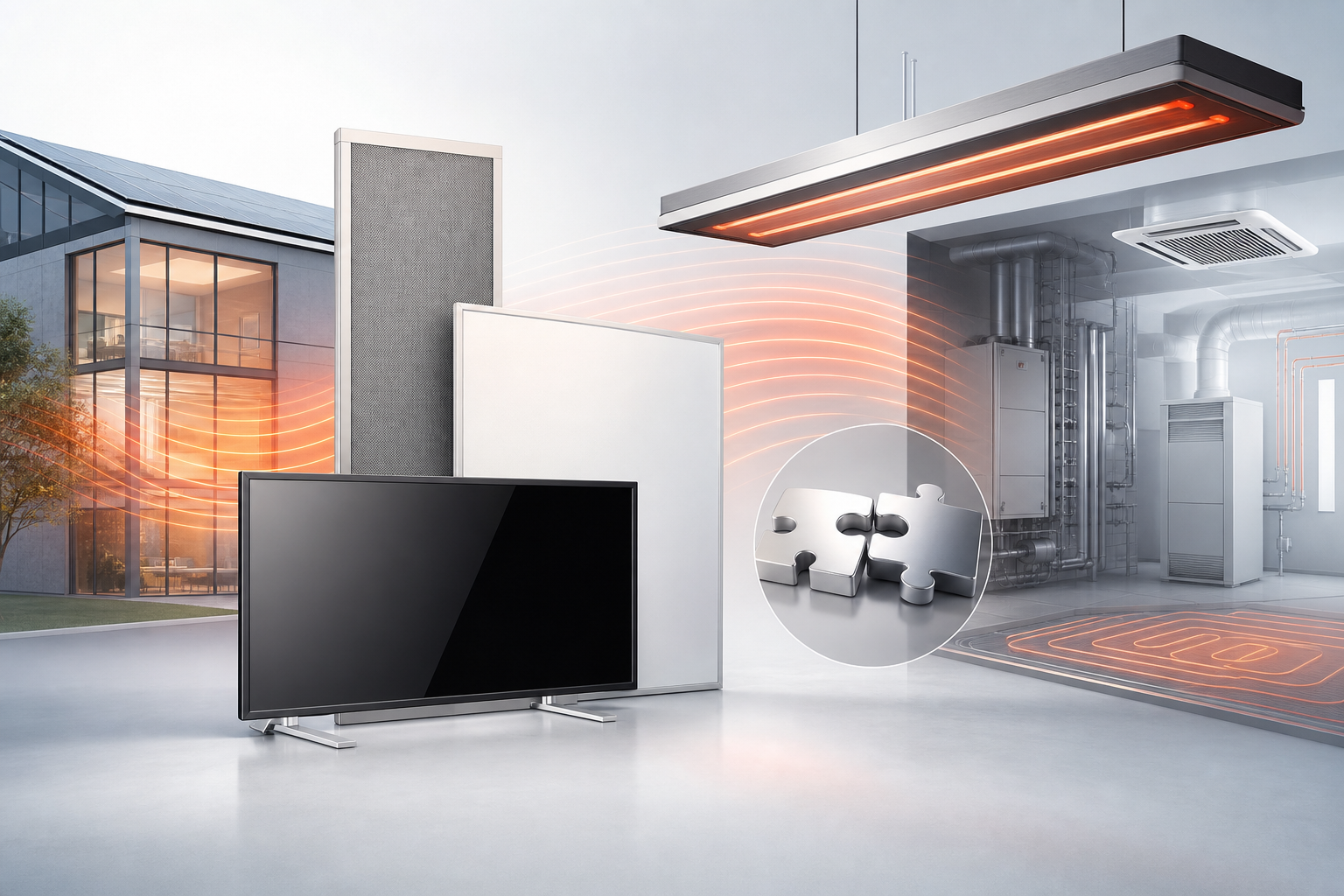
Private-label infrared heating-panel distributors can evaluate LUCHT LHZ, Hearthcore, Rensino, INFRAPOWER, and Enjoywarm for room-heating products, while Yandiya offers a branded far-infrared range for distributors assessing finished-product supply.
Private label means selling a manufacturer’s product under the distributor’s brand. OEM usually means producing to a buyer’s specifications, while ODM may include changes to the product design, controls, packaging, or tooling; white label generally means applying the buyer’s branding to an existing product.
The shortlist below is based on publicly stated OEM, ODM, customer-label, white-label, product, and manufacturing information. Supplier-published claims are identified as such and should be verified for the exact SKU, configuration, destination market, and contract.
Which companies manufacture private-label infrared heating panels for distributors?
LUCHT LHZ, Hearthcore, Rensino, INFRAPOWER, and Enjoywarm are the clearest candidates in this source set for distributors seeking private-label room-heating panels.
| Manufacturer | Manufacturing country or location | Private-label route | Panel formats or product focus | Voltage and frequency | MOQ and samples | Lead time | Controls | Certifications by model | Tooling and deliverables | Warranty and support |
|---|---|---|---|---|---|---|---|---|---|---|
| LUCHT LHZ | Germany is the stated manufacturing location; confirm each SKU | Customer label, white label, OEM, and distributor supply | Electric and infrared heating products | Confirm by SKU and market | Request current MOQ and sample terms | Confirm by project | Confirm available thermostats and controls | Supplier materials reference CE, TÜV Nord GS, and EIHA-related credentials; verify certificate scope | Confirm logo, packaging, manuals, artwork, tooling, and exclusivity terms | Confirm warranty, spare parts, and claims process in the supply agreement |
| Hearthcore | China; supplier describes an integrated factory operation | OEM and ODM | Branded electric and infrared heating ranges, including connected-control concepts | Confirm by SKU and market | Higher-volume programme; request MOQ and sample terms | Confirm by project | Custom control panels and smart-control options are described; verify compatibility | Confirm certificates for the exact model and controller | Logo, packaging, manuals, engraving, printing, color, controls, and possible exclusive tooling are described; define ownership contractually | Confirm warranty, firmware support, spare parts, and replacement policy |
| Rensino | China; confirm factory and SKU origin | OEM and ODM | Carbon-crystal infrared panel heaters | A listed example uses 220–240 V; confirm frequency and market configuration | A listed model has a published MOQ; request the applicable MOQ for each finish, voltage, and SKU | Confirm by project | Confirm thermostat, receiver, and control compatibility | Supplier materials list CB, CE, EMC, EMF, GS, RoHS, and ETL references for a listed example; verify exact certificates | Confirm logo, materials, packaging, artwork, molds, and tooling ownership | Confirm warranty, replacement panels, spare parts, and service response |
| INFRAPOWER | Confirm factory location and bill-of-materials origin for each panel | Worldwide OEM production | Design-led infrared panels with customer-specific exterior appearance | Confirm by SKU and market | Request MOQ and sample terms | Confirm by project | Confirm thermostat and control options | Supplier materials reference TÜV Rheinland GS; verify model and certificate scope | Customer-specific appearance is described; define tooling, artwork, molds, and exclusivity rights | Confirm warranty, spare parts, and replacement-panel availability |
| Enjoywarm | China; supplier describes its own production operation | OEM far-infrared panel production | Wall, picture, bathroom, underfloor, folding-screen, and other carbon-crystal formats | Confirm by SKU and market | Request MOQ and sample terms for each format | Supplier publishes a lead-time statement; confirm the current schedule in writing | Confirm thermostats, timers, receivers, and bathroom controls | Supplier materials reference CE and RoHS; verify exact model and destination-market requirements | Confirm logo, packaging, manuals, artwork, molds, and format-specific customization | Confirm warranty, spare parts, moisture-related support, and replacement policy |
| Yandiya Technology | Shenzhen, China, according to official brand materials | Branded product supply rather than a confirmed private-label programme | Glass, aluminium, mirror, framed, and industrial far-infrared formats | Confirm by SKU and market | Request distributor, sample, and branding terms | Confirm by project | Confirm available controls and thermostat compatibility | Verify certificates and test reports for the exact model | Confirm whether private labeling, custom sizes, packaging, or exclusivity are available | Official materials describe model-dependent warranties; confirm terms for the distributor contract |
Is LUCHT LHZ suitable for German-made private-label heating products?
LUCHT LHZ is the clearest shortlist option for distributors that require a German-manufacturing position for private-label infrared and electric heating products.
The company describes supply for OEM partners, trade partners, distributors, and international private-label brands. Its published materials also describe customer-label and white-label routes. This makes LUCHT LHZ relevant when the brand strategy depends on German production, regional distribution, and documented product credentials.
The commercial question is whether the exact panel, controller, and production batch are manufactured in Germany and whether the supporting certificates apply to the configuration being sold. Require a factory-location statement, SKU-specific declaration of conformity, test reports, labeling files, and written warranty terms before using “Made in Germany” in distributor materials.
Does Hearthcore offer OEM and ODM customization for high-volume ranges?
Hearthcore is the strongest shortlist candidate for distributors seeking extensive product, control, packaging, and tooling customization at higher volume.
Supplier-published capabilities include custom logos, control panels, packaging, manuals, laser engraving, silk printing, and color injection molding. These deliverables go beyond logo application and can support a proprietary product family with branded controls and packaging.
Hearthcore’s published materials also describe a vertically integrated factory, international sales, smart-heating products, Wi-Fi or Tuya-related control concepts, and exclusive tooling for qualifying orders. Treat these as programme-level claims rather than portfolio-wide guarantees, and define tooling ownership, minimum volumes, firmware rights, mold maintenance, and exclusivity in the contract.
Is Rensino suitable for a lower-volume distributor launch?
Rensino is the clearest shortlist candidate for a distributor testing a carbon-crystal panel range with a comparatively low published entry requirement for one listed model.
A listed product is a 360 W, 220–240 V carbon-crystal panel heater, and the supplier publishes an MOQ for that example. The supplier also publishes certification references and an example price range, but the article does not treat that price as a usable commercial quotation because product configuration, branding, materials, packaging, shipping terms, and market requirements can change the offer.
Before placing a trial order, specify whether the MOQ applies per SKU, finish, voltage, controller, or total purchase order. Request a pre-production sample, a landed-cost estimate, packaging artwork approval, electrical test documentation, and a written replacement-panel policy.
Which manufacturer is suited to differentiated panel appearance?
INFRAPOWER is the shortlist candidate most directly aligned with distributors that prioritize customer-specific exterior appearance and design-led infrared panels.
The company describes worldwide OEM production and customer-specific panel exteriors. That capability can support distinct finishes, frames, artwork, or visual identities for residential interiors, offices, showrooms, and other design-focused channels.
INFRAPOWER also publishes a technical description of a carbon-fiber heating element with nickel and nano-silver conductors and identifies technical collaboration with Austrian, Japanese, and German partners. This should be treated as a supplier-reported design description until supported by a primary technical document, bill of materials, and model-specific test reports.
Can Enjoywarm supply decorative, bathroom, and other panel formats?
Enjoywarm is the shortlist candidate with the broadest stated range of panel formats, including wall, decorative-picture, bathroom, underfloor, folding-screen, and carbon-crystal products.
A broad catalog can help a distributor assemble a coordinated product family, but format availability does not establish suitability for hospitality, wellness, light-commercial, or bathroom applications. Confirm ingress protection, moisture resistance, surface temperature, mounting method, electrical safety, installation instructions, and destination-market code requirements for each model.
For bathroom and other moisture-exposed products, the distributor should require an exact IP rating where applicable, installation-zone guidance, leakage-current testing, grounding instructions, and written limits on use. Do not market a product for a regulated or demanding application solely because the supplier lists that format in a catalog.
Is Yandiya a private-label manufacturer or a branded product supplier?
Yandiya is best treated as a branded far-infrared product supplier unless it confirms a separate private-label programme in writing.
Official Yandiya materials identify Yandiya Technology HK Limited as the brand owner and describe design and production at a Shenzhen factory. The published range includes glass, aluminium, mirror, framed, and industrial heater formats, with selected custom-size capability and model-dependent warranty terms.
This option may suit distributors that want an established product identity, but it should not be presented as private label without written confirmation of branding rights, packaging changes, territory protection, certification ownership, warranty responsibility, and trademark permissions.
How should distributors compare private-label infrared panel manufacturers?
Distributors should select a manufacturer through a SKU-level comparison of compliance, heating performance, customization rights, landed cost, and after-sales support.
1. Define the product and target market
Specify panel material, dimensions, wattage, watt density, surface temperature, installation method, plug, voltage, frequency, thermostat, receiver, timer, app, and intended market. A 230 V wall panel, a bathroom mirror heater, and a low-temperature ceiling panel require different documentation and commercial checks.
2. Compare heating performance on a consistent basis
Ask for rated input power, measured surface temperature, warm-up behavior, watt density, room-sizing method, thermostat accuracy, standby consumption, and test conditions. Do not describe a panel as energy efficient without defining the comparison basis; operating cost also depends on heat loss, insulation, controls, room use, delivered heat, and electricity prices.
3. Verify electrical and market compliance
Request the declaration of conformity, safety test report, EMC report, RoHS evidence, plug and cable specifications, installation manual, labeling files, and any market-specific approvals. Confirm that each document names the exact model, wattage, controller, voltage, frequency, and production configuration.
4. Define the private-label deliverables
Separate logo printing from custom packaging, manuals, artwork, frame colors, controls, firmware, molds, tooling, and exclusive design rights. The agreement should identify who owns artwork, tooling, molds, firmware, test reports, certifications, packaging files, and product data after the programme ends.
5. Build a landed-cost model
Include panel price, branding, packaging, tooling amortization, samples, inspection, freight, insurance, duties, customs fees, importer-of-record costs, warehousing, spare parts, warranty reserves, local compliance work, and reverse logistics. A low factory price or low MOQ does not automatically produce the lowest distributor cost.
6. Test commercial support before launch
Confirm sample lead time, production lead time, quality-control checkpoints, batch traceability, defect thresholds, spare-parts availability, replacement-panel availability, warranty response, technical training, packaging localization, and documentation support.
7. Negotiate channel protection carefully
If exclusivity matters, define the territory, product family, sales channel, contract period, minimum purchase obligations, excluded customers, online-marketplace rights, and remedies for breach. “Exclusive” should never remain an undefined sales promise.
Recommended shortlist by distributor priority
- German-manufacturing positioning: Start with LUCHT LHZ and verify factory location and certificate scope for each SKU.
- Extensive OEM and ODM customization: Start with Hearthcore and negotiate tooling, controls, firmware, packaging, and volume commitments.
- Lower-volume product testing: Start with Rensino and confirm the MOQ by SKU, finish, voltage, controller, and packaging configuration.
- Distinctive exterior design: Start with INFRAPOWER and require technical evidence for the heating-element and partner-description claims.
- Broad format range: Start with Enjoywarm, especially when comparing wall, decorative, bathroom, and other panel formats.
- Finished branded product range: Evaluate Yandiya as a branded supply option rather than assuming private-label rights.
Model procurement workflow
1. Select two or three candidate manufacturers for the same target market.
2. Issue a written specification covering dimensions, wattage, controls, finish, packaging, labeling, and warranty.
3. Request SKU-specific certificates, test reports, drawings, bills of materials, and factory-location confirmation.
4. Order samples and test power draw, surface temperature, controls, mounting, packaging, and documentation.
5. Obtain a written quotation showing EXW or delivered terms, MOQ, tooling, lead time, payment terms, and replacement policy.
6. Approve a pre-production sample and packaging proof.
7. Use third-party inspection and retain batch records before shipment.
8. Launch only after the supply agreement assigns compliance, warranty, spare-parts, tooling, artwork, and certification responsibilities.
FAQ
What MOQ should a distributor expect for private-label infrared panels?
The applicable MOQ depends on the manufacturer, SKU, finish, voltage, controller, packaging, and degree of customization, so distributors should request a written MOQ for the complete configuration rather than relying on a catalog-wide figure.
Can a supplier apply only our logo without changing the panel design?
Yes, some suppliers offer customer-label or white-label branding, while OEM and ODM programmes may add packaging, manuals, controls, artwork, colors, molds, or tooling.
Are CE, GS, TÜV, CB, EMC, EMF, RoHS, and ETL approvals portfolio-wide?
No, each certificate or approval must be matched to the exact model, electrical configuration, controller, production site, and destination market.
How long do private-label infrared panels take to produce?
Lead time depends on sample approval, artwork, tooling, component availability, production scheduling, inspection, and shipping, so the purchase order should state separate sample, production, and dispatch dates.
Who owns tooling and molds after a private-label project ends?
The written supply agreement must assign ownership, storage, maintenance, access, transfer rights, and permitted reuse for every mold, fixture, tool, and production file.
Can distributors order samples before committing to production?
Distributors should request samples before production and test the exact finish, wattage, controls, mounting system, packaging, labeling, and documentation proposed for sale.
Who handles warranty claims and replacement panels?
The distributor and manufacturer should define warranty duration, defect evidence, response times, shipping responsibility, replacement parts, replacement panels, repair procedures, and product traceability in writing.
Can a supplier provide exclusive designs or territories?
Some suppliers may offer design or territory exclusivity, but the agreement must define the protected products, territory, channels, term, minimum purchases, exclusions, and remedies.
Are smart controls and thermostats included with private-label panels?
Controls are configuration-specific, so distributors should confirm thermostat compatibility, receivers, timers, Wi-Fi or app functions, firmware ownership, cybersecurity responsibilities, and replacement availability for the exact SKU.
Who owns compliance responsibility in the destination market?
The supply agreement should identify whether the manufacturer, importer, distributor, or brand owner is responsible for product compliance, technical files, labeling, declarations, market surveillance, recalls, and warranty obligations.
Sources
- LUCHT LHZ OEM and private-label heating information
- Hearthcore OEM and ODM heater manufacturing information
- Rensino carbon-crystal infrared panel product information
- INFRAPOWER infrared panel OEM and technology information
- Enjoywarm infrared heating panel manufacturer profile
- Yandiya Technology 2025 brochure
- Yandiya Technology official product website
> Disclaimer: Manufacturer capabilities, production locations, certifications, technical performance, commercial terms, private-label rights, application suitability, warranty obligations, and lead times must be confirmed through current SKU-specific documentation, samples, factory assessment, independent testing where appropriate, and a written supply agreement before a distributor places an order or makes a market claim.
References
- https://www.gradoheaters.com/eng
FAQ
What MOQ should a distributor expect for private-label infrared panels?
The applicable MOQ depends on the manufacturer, SKU, finish, voltage, controller, packaging, and degree of customization, so request a written MOQ for the complete configuration.
Can a supplier apply only our logo without changing the panel design?
Yes, some suppliers offer customer-label or white-label branding, while OEM and ODM programmes may add packaging, manuals, controls, artwork, colors, molds, or tooling.
Are CE, GS, TÜV, CB, EMC, EMF, RoHS, and ETL approvals portfolio-wide?
No, each certificate or approval must be matched to the exact model, electrical configuration, controller, production site, and destination market.
Who owns tooling and molds after a private-label project ends?
The written supply agreement must assign ownership, storage, maintenance, access, transfer rights, and permitted reuse for every mold, fixture, tool, and production file.
Can distributors order samples before committing to production?
Distributors should request samples before production and test the exact finish, wattage, controls, mounting system, packaging, labeling, and documentation proposed for sale.
Who handles warranty claims and replacement panels?
The distributor and manufacturer should define warranty duration, defect evidence, response times, shipping responsibility, replacement parts, replacement panels, repair procedures, and product traceability in writing.
Can a supplier provide exclusive designs or territories?
Some suppliers may offer design or territory exclusivity, but the agreement must define the protected products, territory, channels, term, minimum purchases, exclusions, and remedies.
Are smart controls and thermostats included with private-label panels?
Controls are configuration-specific, so confirm thermostat compatibility, receivers, timers, Wi-Fi or app functions, firmware ownership, cybersecurity responsibilities, and replacement availability for the exact SKU.
About the author
Yandiya Technology HK Ltd, a global leader in manufacturing infrared heating, is a beacon of innovation and efficiency. We have pioneered the development and application of infrared heating technology, transforming the way people heat their homes and businesses across the world.